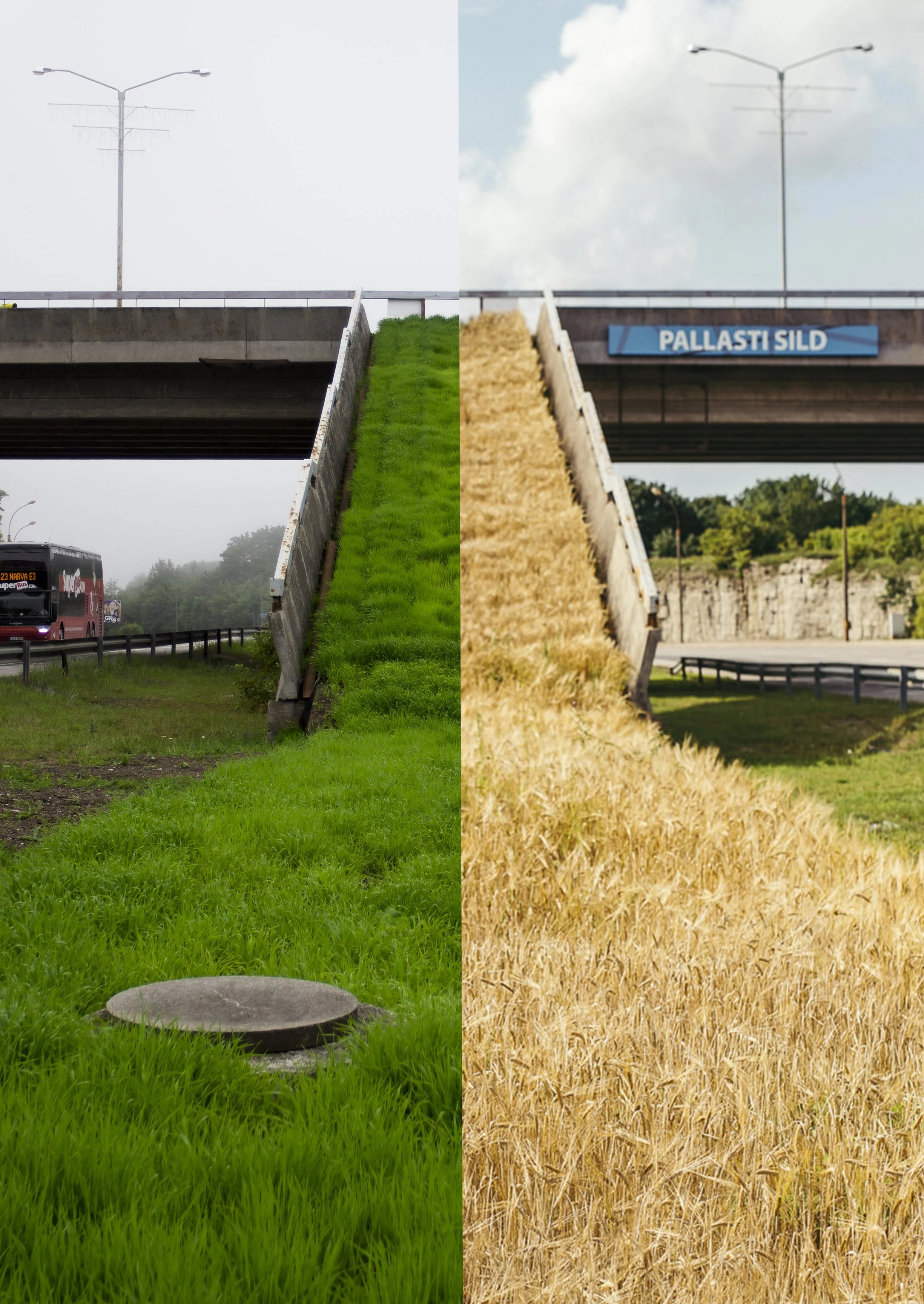
urban barley field
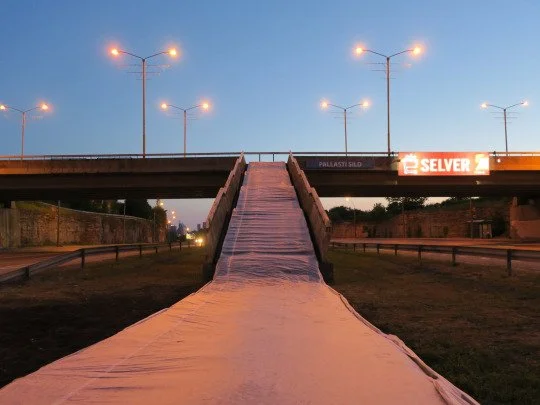
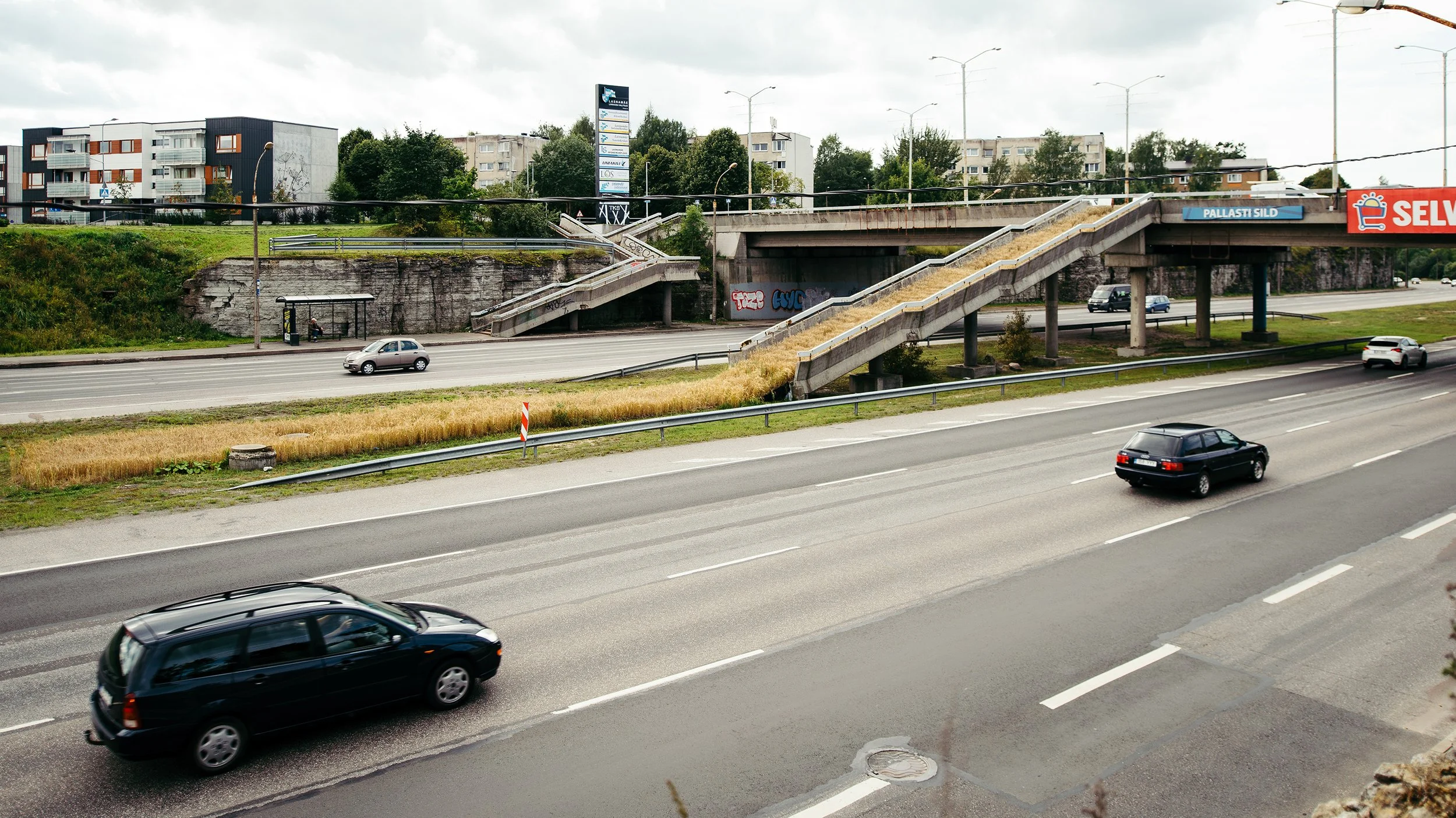
The Soviet-era district of Lasnamäe in Tallinn was built in the late 1970s and has since fallen into stagnation. A vast traffic channel was constructed — roads, bridges, and concrete stairs — all built for a tramline that never arrived.
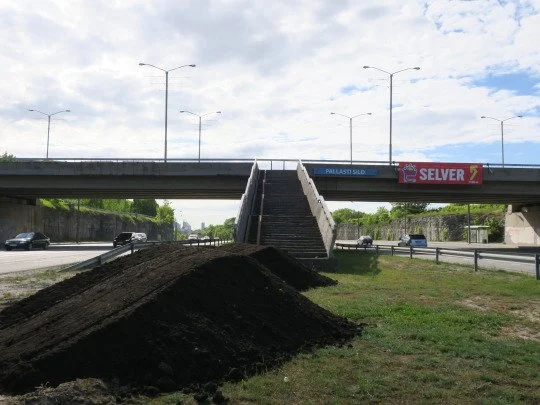
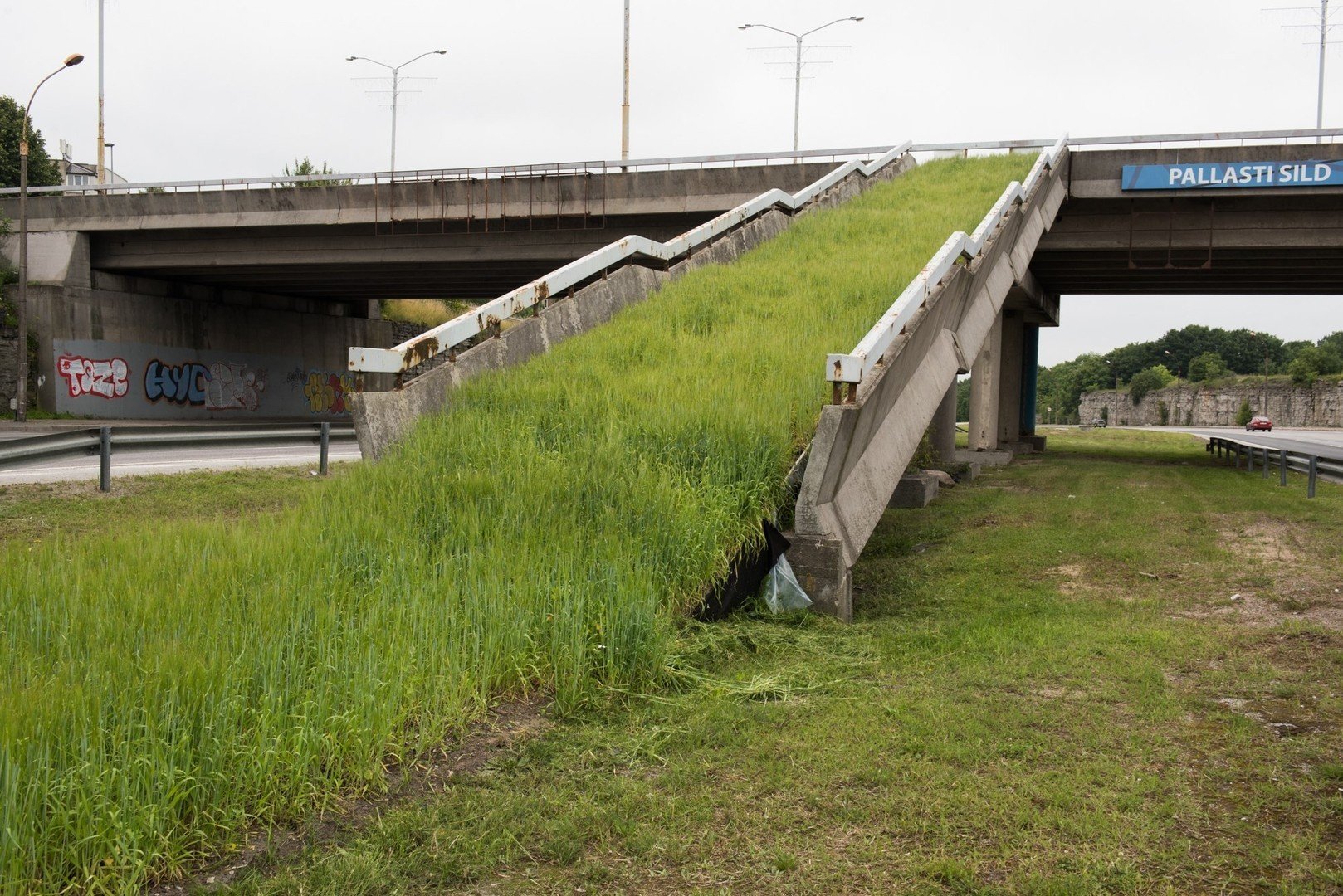
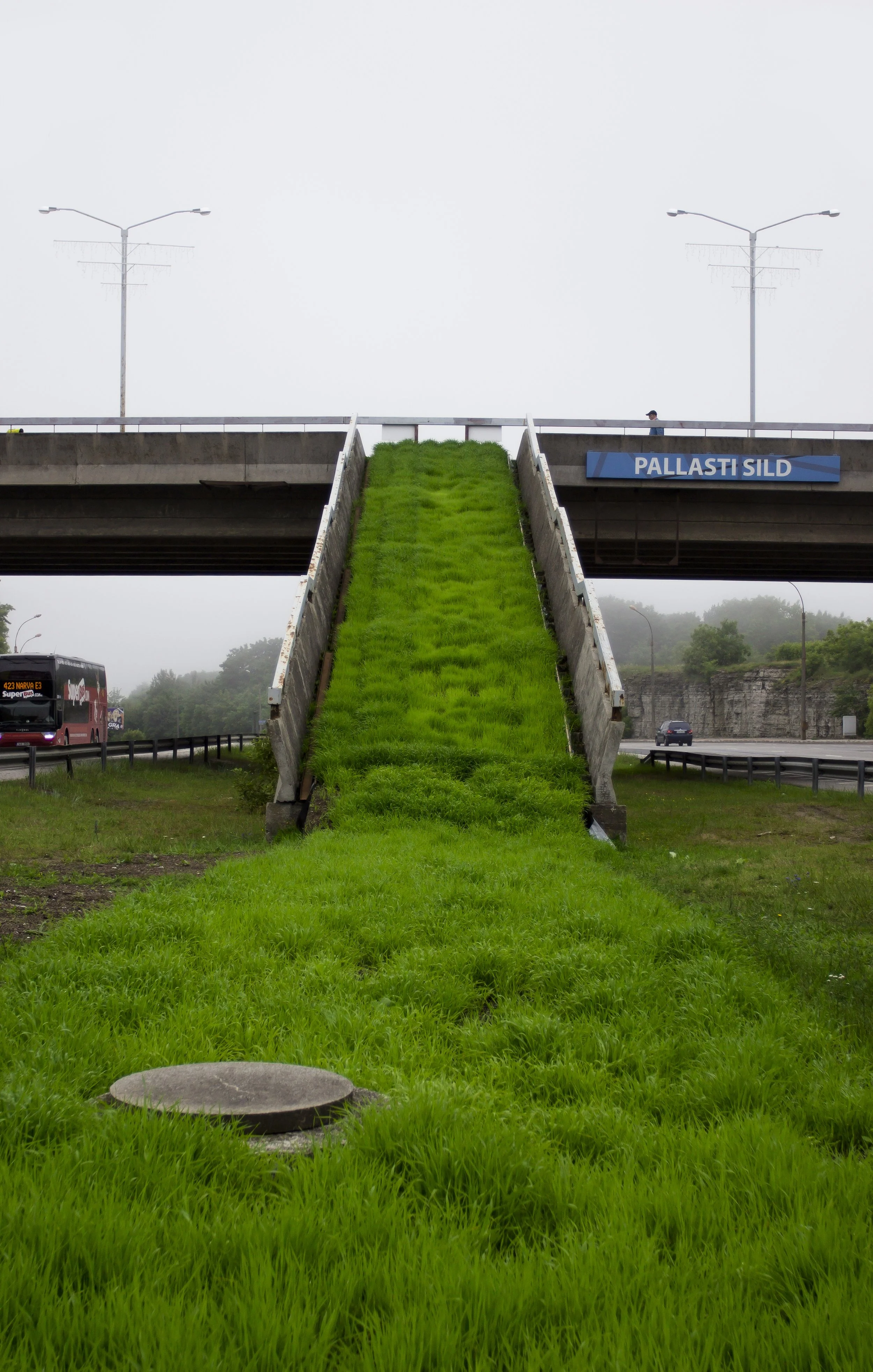
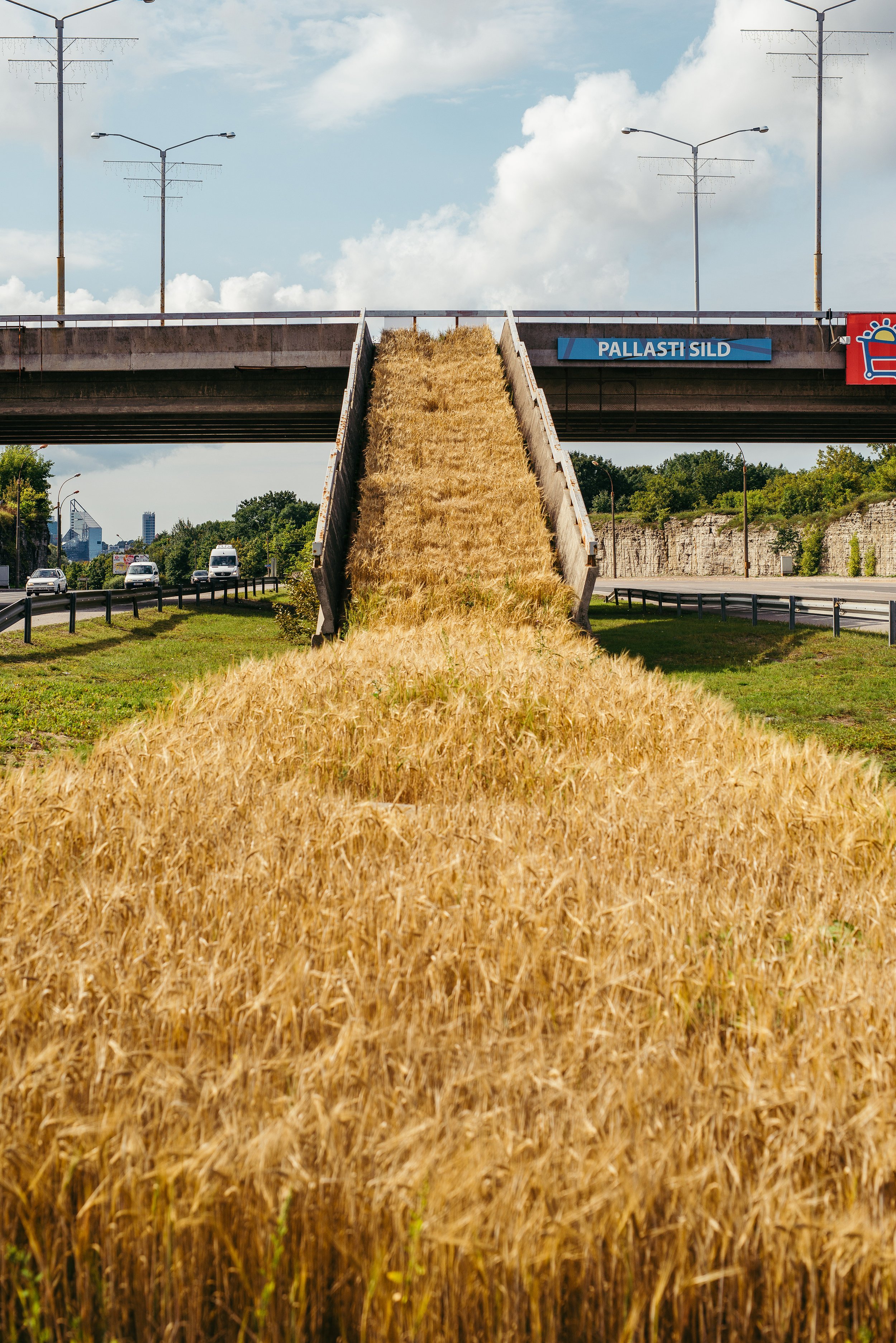
In the summer of 2016, a barley field was seeded on those stairs as a temporary installation and mid-term urban solution. The idea came from history: barley was the earliest crop grown in Estonia, cultivated in the Lasnamäe area around 500–600 BC. Since barley cultivation was historically brought to Estonia from Russia, and the tramway stairs mark the border between Estonian- and Russian-speaking districts, the installation carried a quiet idea of integration.
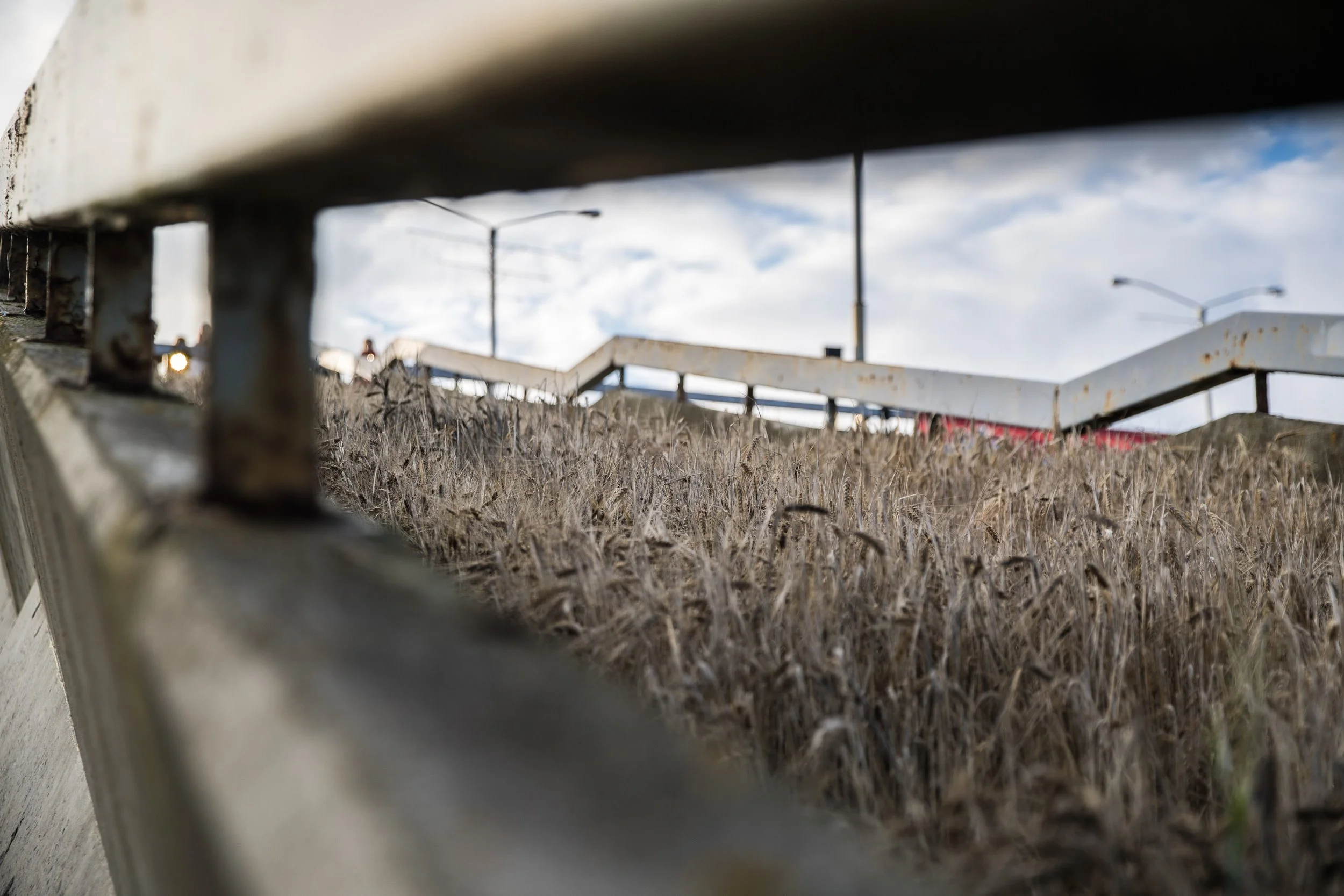
Through the summer, the field transformed — black soil giving way to green seedlings, then to a ripe golden crop. The aim was to bring softness and life to an industrial area, but also to encourage locals to take steps towards changing their neighbourhood rather than waiting for authorities who had already kept them waiting for over 40 years. The project was funded through crowdfunding and built with volunteers. Forty-five tons of soil were carried up the stairs bucket by bucket.
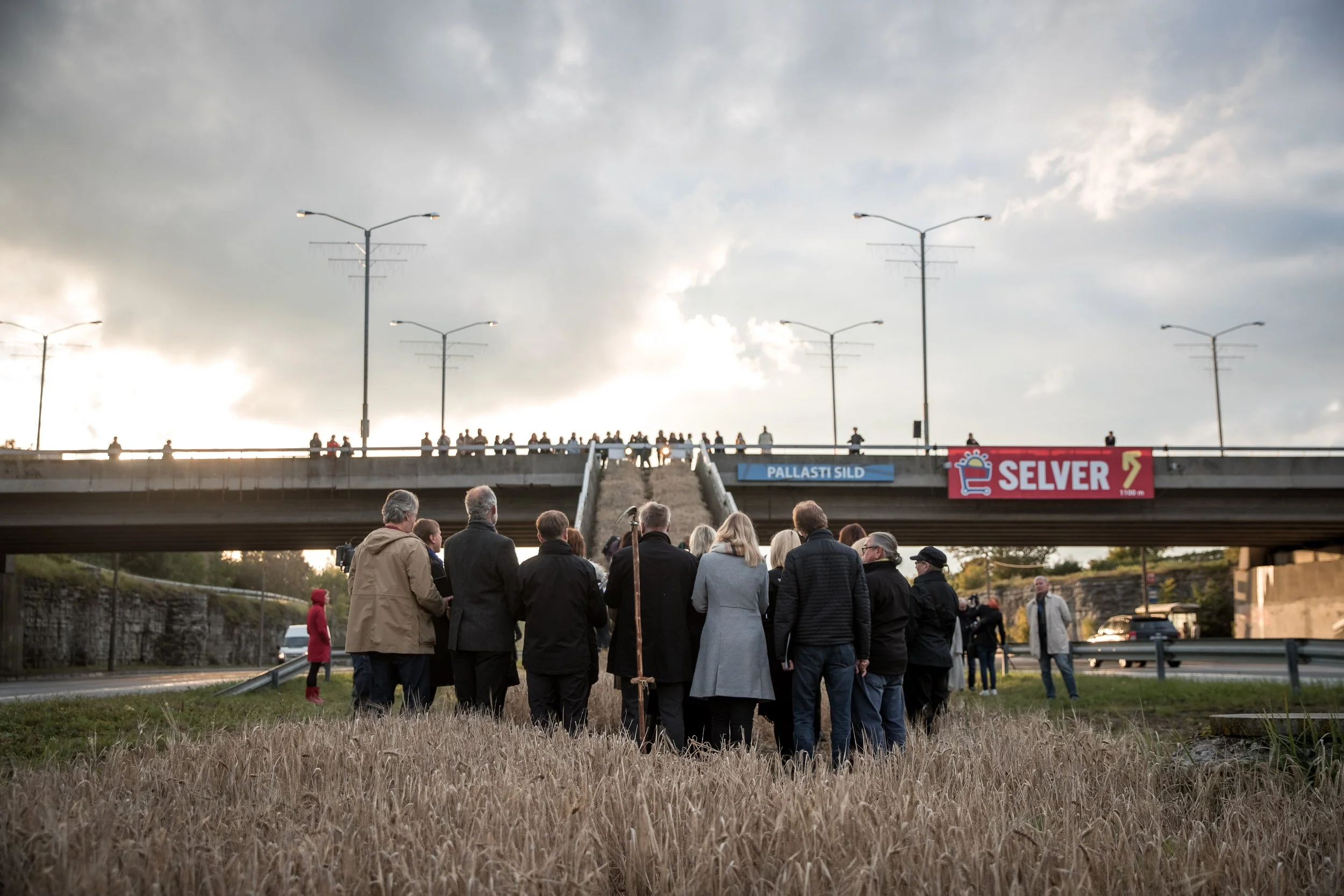
By late September the crop was harvested at a community party. The harvest was gifted to crowdfunders — some of it now lives as jewellery, some was sent to a laboratory to test air pollution levels in the area. The project inspired both locals and authorities to act: 38 seasonal flowerbeds were subsequently installed along the traffic channel.
Authors
Andrea Tamm, Ann Press
Year
2017
Photo credits
Tõnu Tunnel, Markus Tamm
Awards
Core77 Design Awards Built Environment Award 2017 / Student runner-up
Core77 Design Awards 2017 / Community prize
Estonian Architecture Awards 2017 nominee
Estonian Architecture Awards 2017 / People's choice award
video: vimeo.com/181689206